Meg Fatharly - Artist in Residence
I have the great pleasure of temporarily handing over my journal to the creative genius Megan Fatharly.
Meg works with words and images to create profound, witty and very beautiful embossed treasures. Earlier this year, I invited her to be one of our annual ‘Artists in Residence’. Here she tells us what she learnt from her stay at Glenburn - about herself and the creative process through which she makes her audience laugh, cry and understand.
Max
Growth is not Linear - By Meg Fatharly
The struggle to slow down
I often work under pressure and at speed. I tell myself it’s what us artists do. We need to quickly grab hold of the ideas and inspiration that bubble up from the profound ‘normal’ of life. We also need to make a living. So, when I was offered the opportunity to simply focus on myself and my art in one of the most beautiful corners of the Scottish Borders, I happily said ‘Yes please’.
I arrived at the home and design-space of Maxine Harrison Sloss, ready to relax and open my mind to a whole range of new works. I knew there would be a pretty Georgian House, a Walled Garden and a warm welcome. But the depth of relaxed beauty was astonishing and with it came learning that was both surprising and complex.
Slowing down sounds nice in theory. In practice it felt as if I was moving against my inner, urgent wiring. My creativity doesn’t usually come with an end point, it’s more instinctive than that. But I could feel myself trying to force one. As if I needed to make sure I left Glenburn with something finished, something that proved this gift of time and space had been used well.
I was putting pressure on my own creativity - trying to make ideas land before they were ready. Trying to translate everything I noticed into something tangible. And it just wasn’t working.
Finding my creative core
So, I pulled myself back and started again. I returned to what I actually enjoy, which is documenting. Not deciding what something needs to become, just letting it be what it is, for a moment.
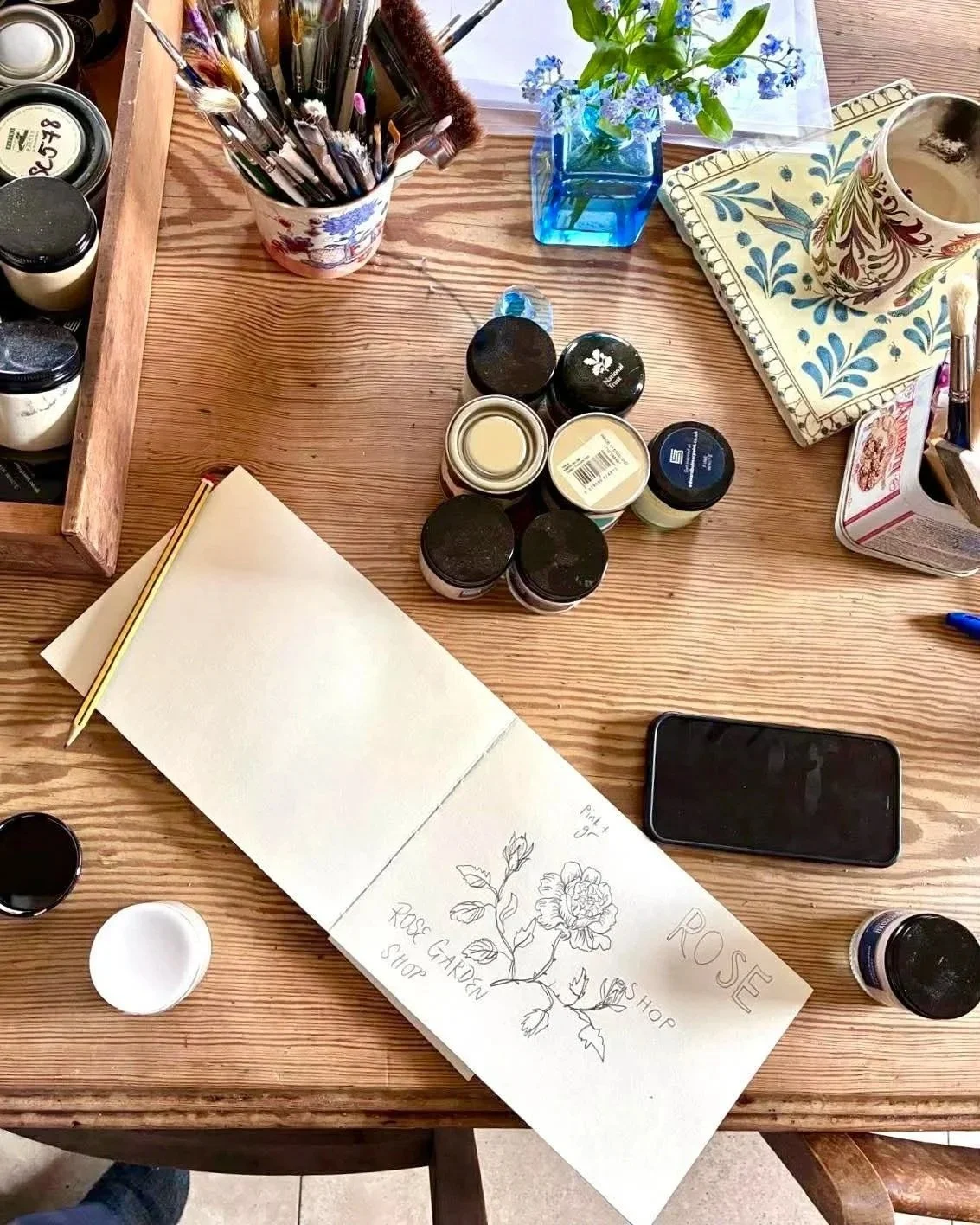
I drew flowers without overthinking them. I used printmaking methods to capture fragments of the house, small details, textures, things that might not look like much on their own but felt like part of the place.
I also worked bigger than normal. My pieces tend to be quite small, contained, so scaling things up meant I couldn’t control them in the same way. But I think that was part of the point. Letting things be a bit looser, a bit less precise. Uncomfortable at first but in the end, a process that fed my confidence with joy.
No such thing as a perfect pace
I learnt about the way much of my work has been born – instinctively, reactively. So initially, the slower pace felt counterintuitive. As if I was interrupting something that only really works when I move quickly. But Glenburn helped me realise that not everything needs to happen at speed. Some things only make sense with more space and deeper breathing.
Glenburn made a mark on me and I am happy to say I left a permanent sign in return. By creating a very specific, in situ piece, I am proud to have become part of the place’s history. It was fun to do – an immediate response to a special corner that was not an invention or add-on but a piece that conversed with the beauty of the place.
I’m still figuring out what slowing down actually looks like for me. Not as an idea, but in practice. But one thing’s for sure, this whole experience was an invaluable step forward. Thank you Max. Thank you Glenburn.